Nz donor agreements and legalities
Donor conception can be beautiful, but it is also one of those areas where you want clarity up front. Understanding the legal landscape helps you set boundaries, reduce risk, and make decisions that protect you, your donor, and your future child.
This page is educational and based on publicly available information. It is not legal advice. If you are unsure about your situation, speak with a New Zealand family lawyer before you start.

Donor agreements and key facts
Both donors and recipients should go into donor conception understanding that method matters. The legal position can be very different depending on whether conception happens through an artificial insemination process or through sexual intercourse.
A written agreement is still recommended. It helps set expectations and boundaries, even if it cannot guarantee outcomes in every possible scenario.
Laws around natural insemination (ni)
Natural insemination involves conception through sexual intercourse. In New Zealand, this can create a very different legal situation compared with artificial insemination.
If you are considering natural insemination, get legal advice before you proceed. It is not just about consent between adults. It is also about how parentage, guardianship, and child support can be treated later.
Conception through sexual intercourse
The excerpt below is included to highlight how the law may treat conception through sexual intercourse differently from artificial insemination.
Quoting the New Zealand Law Commission paper (via nzlii): A man may participate in sexual intercourse for the sole purpose of enabling a woman to achieve a pregnancy, with the joint intention of them both that he is to have no rights or responsibilities in relation to the child. It is generally agreed that the special rules established by the Status of Children Amendment Act do not apply in this situation because conception resulting from sexual intercourse falls outside the legal definitions of “artificial insemination” and “assisted reproductive procedure”. In law, the donor will be the father of the child, although he will not be a legal guardian unless the woman is his de facto partner or spouse. The donor will be liable for child support should the mother claim it.
Parental rights and responsibilities
New Zealand does have laws that deal with assisted reproduction and legal parentage. In many artificial insemination situations, a non-partner sperm donor is not treated as a legal parent. However, arrangements can still become complex, especially if expectations are unclear or the situation changes over time.
A written agreement is still strongly recommended. It clarifies what everyone agreed to, including boundaries, contact, and intentions around parentage and involvement. If you want extra confidence, have a family lawyer review it.
Birth registration is also important to discuss early. What is recorded, and why, can matter. If you are considering Co-parenting or ongoing donor involvement, get legal advice before you finalise anything.
Payments and sperm donation
In New Zealand, gamete donation is intended to be altruistic. Paying a donor a fee or offering a financial reward for sperm donation can create legal and ethical risk. However, reasonable and necessary expenses may be reimbursed, such as transport costs directly related to the donation.
If money is discussed at all, keep it transparent, keep it genuinely cost-based, and document it so everyone understands what is covered and what is not.
Why are payments restricted?
These rules help reduce exploitation and discourage arrangements that prioritise profit over the well-being ofdonor-conceivedd children. They also help avoid situations where donors feel incentivised to donate broadly without considering long-term impacts.
Birth certificates and the law
Birth registration can be emotionally loaded and legally important. Before you register, talk through what will be recorded, what it means, and what everyone expects long term.
You may have seen fertility clinics reference the Australian case Masson v Parsons. This is an Australian case, not New Zealand law, but it is often discussed as a cautionary example when arrangements become disputed. If you are considering co-parenting or listing a donor on documentation, get New Zealand legal advice specific to your situation.
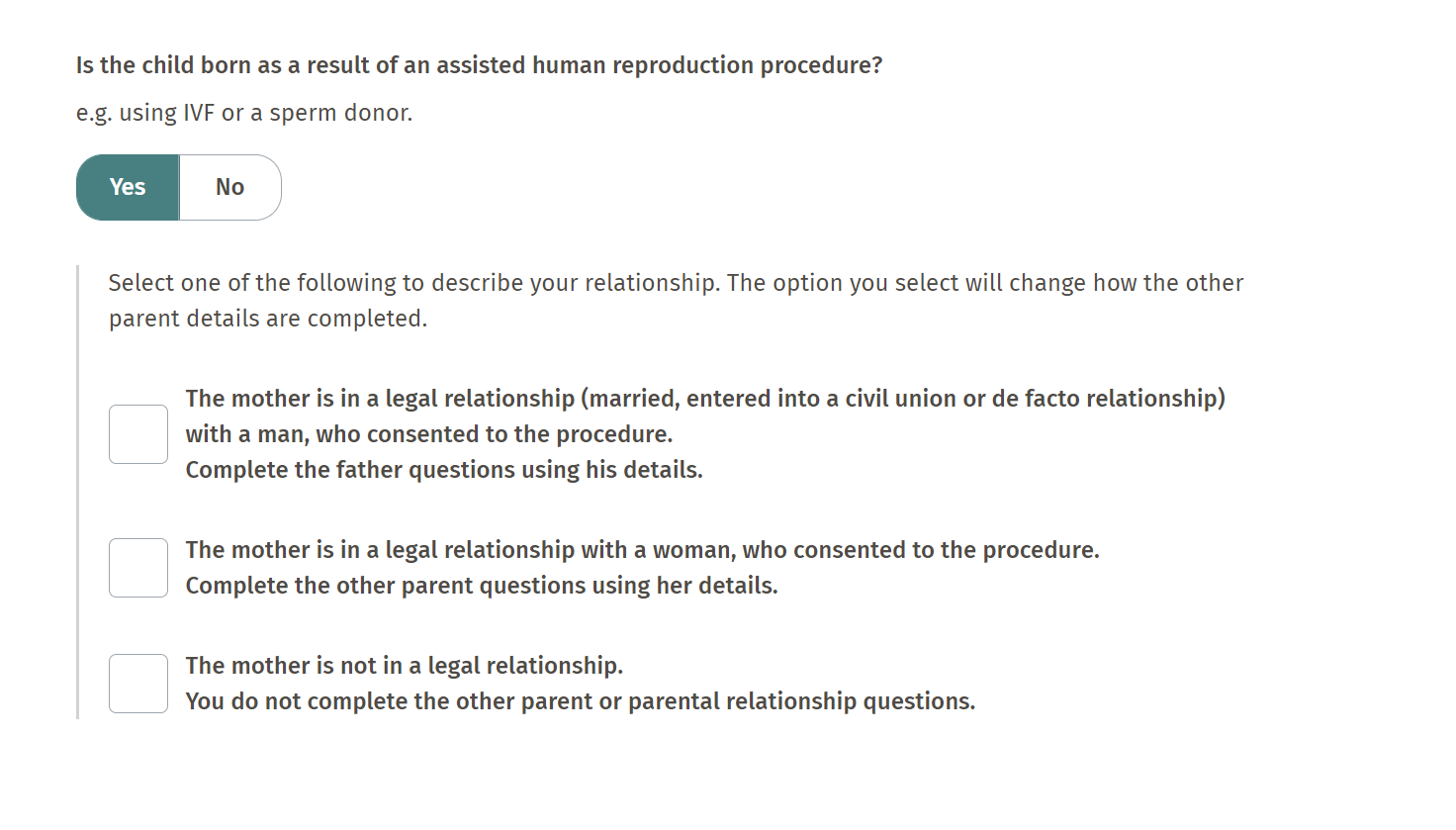
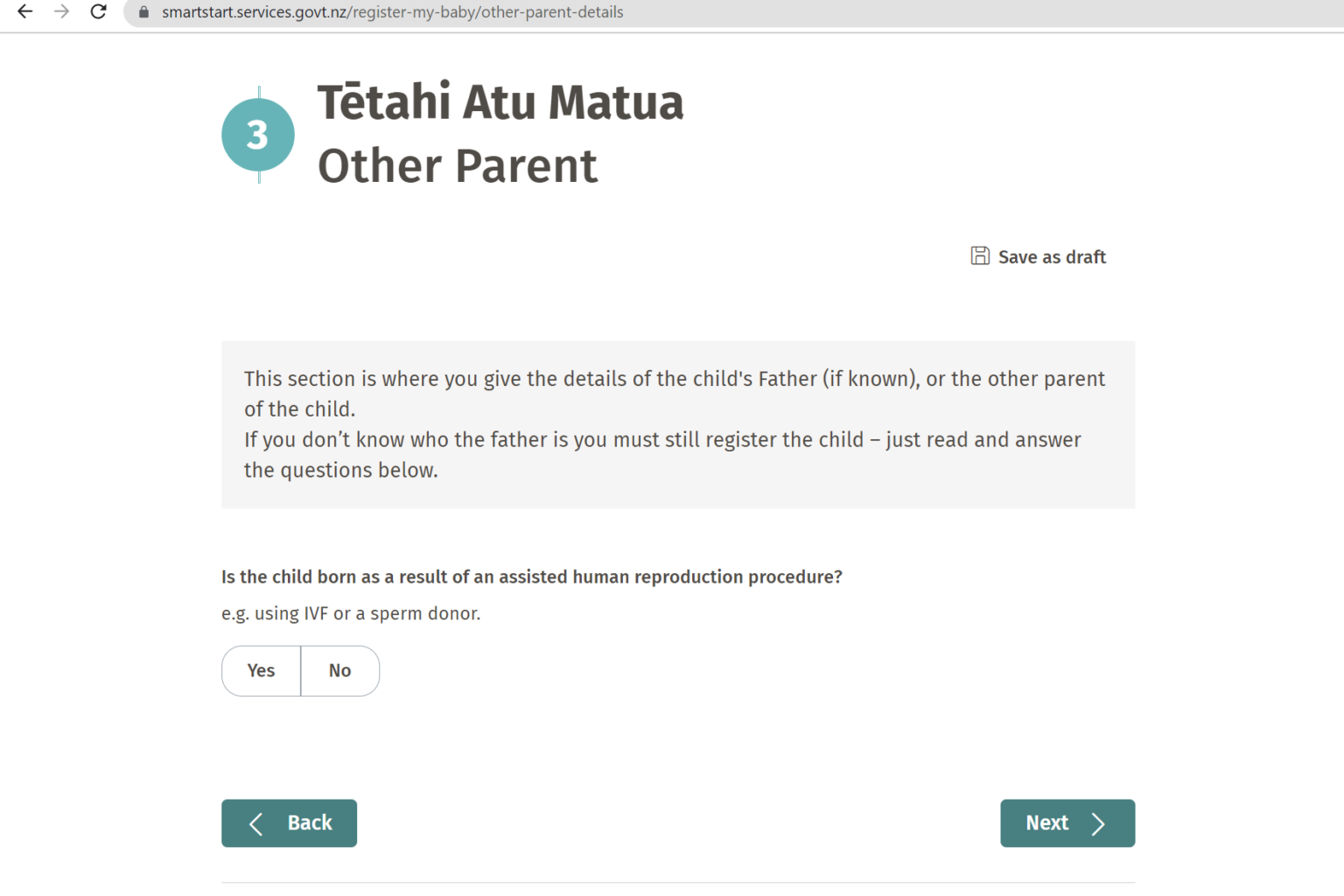
Birth registration and family structures
New Zealand birth registration options have evolved. If you are registering a birth, follow the current SmartStart process and read each option carefully, especially around how parents are recorded.
The screenshots below were taken in November 2021 and are included as a historical example only. Options may have changed since then.
Screenshots taken in November 2021
Putting together a donor recipient agreement
Once you have a donor, creating an agreement can feel intimidating, but it is one of the kindest things you can do for everyone. It helps reduce misunderstandings and makes sure you are aligned on the big stuff before emotions and pregnancy enter the picture.
Besides the basics, it helps to think through boundaries, contact, and future questions. We cover donor conversations and due diligence on our about your donor page.
Here is the agreement template: download agreement template
Some personal advice
Talk through the awkward scenarios before they happen. It can feel intense up front, but it prevents stress later. Here are a few examples to consider:
-
What happens if you see each other in public? What if they are alone, with a partner, or with family? Agree on what you will do so there are no unwanted or confusing interactions.
-
Who knows in the donor’s life? If their family does not know, what happens if they find out later? If they do know, what contact expectations exist?
-
Updates about the child. Do they want photos? How often. What boundaries apply to sharing?
-
Future questions. Are you comfortable showing your child a photo? Can the child meet the donor at a certain age? How will you handle contact if your child asks for it?

If you need help navigating any of this, a TTC consultation can help. Book a free 15-minute virtual consult today.
Book a ttc consultation