Artificial insemination usually means placing sperm into the vagina or near the cervix without intercourse. In a clinic setting, a medical procedure like IUI places prepared sperm into the uterus using a catheter. This article focuses on the at-home methods most people use, plus what to avoid.
There are three main types of at-home insemination
When timed correctly, artificial insemination (AI) and natural insemination (NI) can be equally successful for many people. The biggest driver of success is usually timing, sperm quality, and your individual fertility factors.
-
Artificial insemination (ai) – sperm is inserted into the vagina using a syringe or similar device.
-
Natural insemination (ni) – conception through sexual intercourse.
-
Partial insemination (pi) – ejaculation occurs in the vagina without full intercourse.
Below, we cover what to consider before you inseminate so you can feel prepared. At the bottom of this page, you will find a step-by-step video showing the insemination process.
Timing
Ovulation is typically triggered around 36 to 40 hours after levels of luteinising hormone (lh) rise. This is known as the LH surge. Once released, the egg travels into the fallopian tube where it can meet sperm to be fertilised. Timing is everything, as we quickly learned.
On Taryn’s first cycle, we inseminated on the evening of her LH peak and only did one insemination. This was our first experience with AI, so it was more of a trial as we figured out the process. Unfortunately, it wasn’t successful.
According to the calendar, Kat was due to ovulate on the 5th of March 2020, so we planned one insemination on the 1st and a second on the 5th. Kat reached her peak a day earlier, the 4th of March, so we inseminated that night.
Taryn was due to ovulate again on the 19th of March. We arranged for our donor to come over on the 17th and again on the 19th. Taryn’s LH peak came on the 18th of March, but our donor couldn’t come earlier, so we went ahead on the 19th.
Syringes
Many people feel overwhelmed by syringe sizes, so let’s make it simple. The average ejaculate is around 1.25 to 5 ml. Quantity matters far less than sperm quality and timing. A 10 ml syringe is often easier because it is longer, more comfortable to hold, and gives you more control when placing sperm near the cervix.
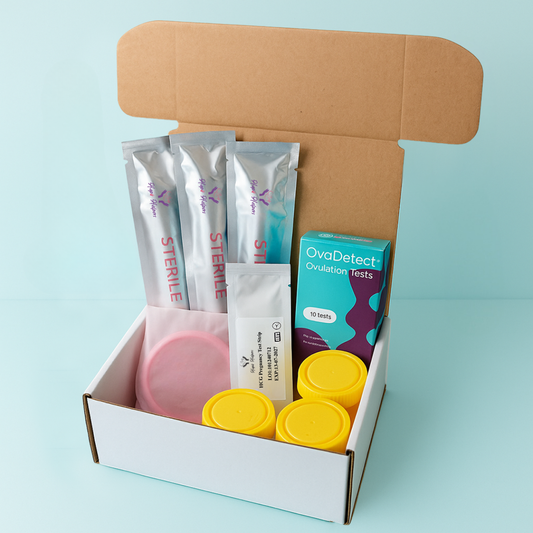
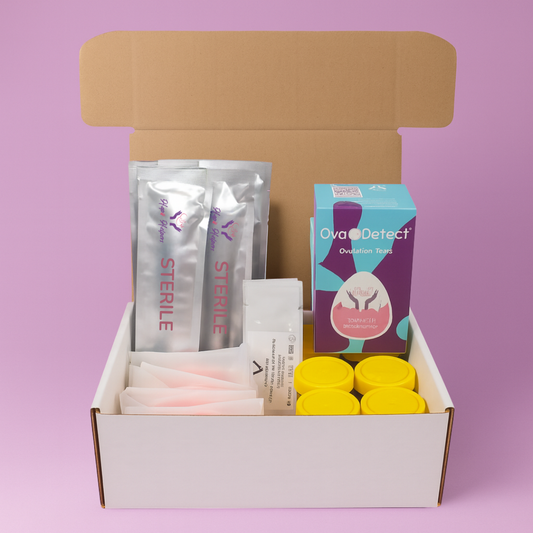
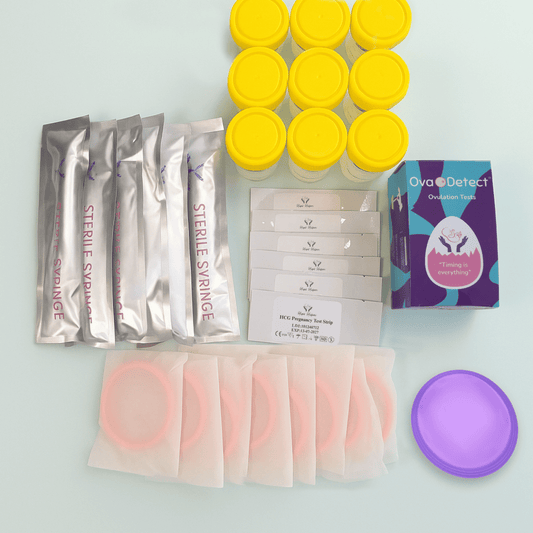
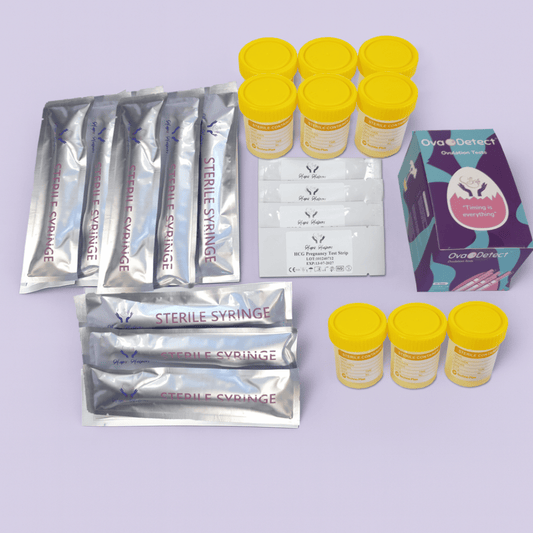
From personal experience, we found standard oral syringes uncomfortable because the edges can feel sharper. That is why we supply round-tipped 10 ml syringes designed for comfort. They are similar in concept to Mosie, without the ridiculous price.
Comparison between a standard syringe and a Hāpū Helpers syringe

Watch this video where I discuss insemination syringes
Softcups
Softcups and softdiscs are disc-shaped menstrual products. Many people use discs during insemination to help keep sperm closer to the cervix. It is optional, but it can be a helpful add-on for some.
Please make sure you are using a disc rather than a deep menstrual cup, as cups can sit differently and may be less comfortable for this purpose. We supply discs in our online store.
We also looked into a reusable option and worked with manufacturers to create a reusable disc designed to feel more like the disposable style. Please note that silicone itself is considered sperm safe and does not harm sperm.
See the videos below on softdiscs (reusable and disposable), plus how to insert and remove them.
There is also a method that only uses a disc. This involves placing sperm into the disc and inserting it into the vagina. Some people find it works well, while others find it easier to spill, so do what feels best for you.
What are softcups and discs, and how do they work?
How to insert and remove your softcup or disc
Sperm-friendly lubricant
Sperm-friendly lubricant can be helpful for people who feel dry during their fertile window or want extra comfort. Cervical mucus supports sperm movement, and standard lubricants can be harsh on sperm.
Insert the lubricant around 10 to 15 minutes before insemination so it can warm to body temperature. Sperm are temperature sensitive, and exposure to extreme cold or heat can reduce motility and viability.
Offer it to your donor as well if needed. If a donor uses lotions, saliva, or non-sperm-friendly lubricants, it can reduce sperm survival. We stock two sperm-friendly options in our store.
An important note on at-home iui
You may see people online talking about “at-home IUI”, where a catheter is passed through the cervix to place sperm into the uterus. True intrauterine insemination (IUI) should only be performed by trained medical professionals using sterile technique.
Attempting this at home increases the risk of infection and injury, including damage to the cervix or uterus. If you are considering IUI, speak with a fertility clinic so it can be done safely.
At-home insemination with a syringe places sperm in the vagina near the cervix and does not involve passing instruments through the cervix.
Watch this video on how to do artificial insemination at-home
Some faqs on at-home artificial insemination
Do you need to orgasm after insemination?
If orgasms were essential, we probably wouldn’t have much of a population, would we? Some people believe the contractions can help move sperm along. We did orgasm after insemination.
There is no harm in orgasming, only potential benefits. It can help you relax and release endorphins. If you do orgasm after insemination, avoid oral sex and intercourse straight after, as it can disrupt the sperm you have just placed.
Will air bubbles in the syringe harm the sperm?
Small air bubbles are fine, and they will not harm sperm. You just want to avoid a large bubble. If you have one, hold the syringe tip up and tap gently to bring the bubble to the top.
Do i need to take supplements?
Many people start supplements around three months before trying to conceive. Folic acid is commonly recommended before conception and through the first trimester. Iodine is also commonly recommended in pregnancy and breastfeeding in New Zealand. If you have medical conditions or take medication, check with your healthcare provider.
See why the complete prenatal supplement might be the best for you.