What Is artificial insemination?
Artificial insemination (AI) is the process of placing sperm into a person's reproductive tract without sexual intercourse, with the goal of achieving pregnancy. It can be performed in a clinic by a medical professional, or done privately at home in which case we call it at-home insemination or self insemination.
When done at home, sperm is placed into the vagina or at the cervix using a syringe or similar device, timed to coincide with ovulation. No anaesthetic, no stirrups, and no medical appointment required.
As more people face fertility challenges and family structures continue to evolve, at-home artificial insemination has become a practical and accessible path to parenthood for a growing number of individuals and couples in New Zealand and around the world.
Artificial insemination vs natural insemination
You might be wondering: what's actually the difference between artificial insemination and natural insemination?
Natural insemination refers to conception through sexual intercourse, where sperm travels naturally to meet the egg. Artificial insemination skips intercourse entirely, placing sperm directly at or near the cervix (or into the uterus, in the case of IUI) to give it a shorter path to travel.
For many families, natural insemination simply isn't an option whether due to same-sex partnerships, single parenthood, sperm quality challenges, or other fertility factors. At-home artificial insemination bridges that gap in a way that feels personal rather than clinical.
Who is at-home insemination for?
At-home insemination isn't just for one type of family. People across a wide range of situations choose it, including:
- Same-sex female couples looking to conceive using donor sperm
- Single women who want to start a family independently
- Heterosexual couples experiencing difficulty conceiving naturally
- Couples using a known donor who prefer a private, comfortable setting
- Anyone who wants to try a less invasive option before pursuing clinical fertility treatment
It's worth noting that at-home insemination is most suitable for people with no identified medical cause of infertility. If you have a diagnosed fertility condition such as blocked tubes, severe endometriosis, or very low sperm motility, a clinic consultation is an important next step alongside or instead of home insemination.
Why people choose at-home insemination
1. Privacy and comfort
For many, the idea of conceiving in a clinical environment with strangers, paperwork, and fluorescent lighting doesn't feel right. At-home insemination lets you be in your own space, with your partner or support person present, in an environment you control. That sense of calm and intimacy can matter more than people expect.
2. Flexibility and timing
Conception timing is everything. Ovulation doesn't wait for clinic hours, and neither does your fertile window. Doing insemination at home means you can act the moment your ovulation test turns positive - day or night, weekend or weekday - without waiting for an appointment.
3. Significantly lower cost
This is often the deciding factor for many families. Clinical fertility treatment in New Zealand is expensive:
- IVF: approximately $10,000–$15,000 per cycle (privately funded)
- IUI at a clinic: approximately $1,800 per cycle (excluding initial consultations and tests)
At-home insemination with a quality home insemination kit is a fraction of that cost. Kits typically include everything you need - a sterile syringe, collection cup, and soft disc for under $100. This makes it a genuinely accessible starting point, especially for families who don't yet qualify for publicly funded treatment.
For those exploring home insemination with donor sperm, note that it is illegal in New Zealand to pay a donor for sperm. This makes finding a known donor or using a reputable sperm bank the two primary routes, and at-home insemination the more cost-effective way to use that sperm compared to clinic-based treatment.
4. Reduced emotional pressure
Fertility clinics are important but they can also feel intimidating, particularly for those who already feel vulnerable. Some people experience the clinical environment as sterile in both senses: physically and emotionally. Doing insemination at home, in your own rhythm, can reduce stress, and stress reduction genuinely matters when you're trying to conceive.
5. Inclusivity and autonomy
New Zealand's publicly funded fertility pathways come with significant eligibility requirements including residency status, age limits, BMI criteria, and specific family situation criteria. Many LGBTQ+ families, single parents, and those who fall outside these parameters face real barriers to funded care.
At-home insemination gives those families a starting point that doesn't require meeting someone else's criteria. It's your body, your family, your timeline.
Is at-home insemination safe?
Yes, when done correctly, at-home insemination is considered safe. There are no medications involved, no instruments inserted beyond the cervix, and the process itself is similar to what your body experiences naturally.
A few things to keep in mind:
- Use sterile, purpose-made equipment. A quality home insemination kit uses medical-grade, body-safe materials. Avoid improvised tools.
- Know your donor's health status. If using a known donor, STI testing is essential before proceeding. This protects both you and any future child.
- Timing matters. Inseminating too early or too late in your cycle reduces the chance of success. Tracking ovulation accurately (using ovulation test strips or a fertility monitor) is key.
- There is no medical procedure happening. You are simply placing sperm where it needs to go. This is not a medical risk in the way that surgical procedures are.
If you have any pre-existing health conditions or concerns, speaking with your GP or midwife before starting is always a good idea.
How successful is at-home insemination?
Success rates vary depending on a number of individual factors, including age, cycle regularity, sperm quality, and timing. That said, here's what we know:
- For people under 35 with no identified fertility issues, monthly success rates for well-timed insemination are broadly comparable to natural conception — roughly 10-20% per cycle.
- Many people conceive within 3–6 cycles.
- Timing insemination accurately around ovulation is the single biggest factor in improving your chances.
At-home insemination works best as a starting point. If you have been trying for several cycles without success, that is a good signal to speak with a GP or fertility specialist to rule out any underlying factors.
Understanding your options: ICI, IUI, and IVI
When people search for "artificial insemination," they often come across a few different terms. Here's a plain-English breakdown:
ICI (Intracervical Insemination) Sperm is placed at the opening of the cervix using a syringe. This is the most common method for at-home insemination and is what most home insemination kits are designed for. It's simple, gentle, and effective for those with no fertility barriers.
IVI (Intravaginal Insemination) Sperm is placed in the vagina rather than at the cervix. Often done using a soft disc (like a menstrual disc) worn at the cervix, which holds sperm in place. This is another comfortable option for home use.
IUI (Intrauterine Insemination) Sperm is placed directly into the uterus using a thin catheter, bypassing the cervix entirely. This requires sperm washing (done in a lab) and is typically performed in a clinical setting. While some people ask about "at home IUI," it is not safely replicable at home as unwashed sperm placed into the uterus can cause cramping and complications.
For most people starting out with at-home insemination, ICI or IVI are the right methods and what a good home insemination kit is built around.
What's in a home insemination kit?
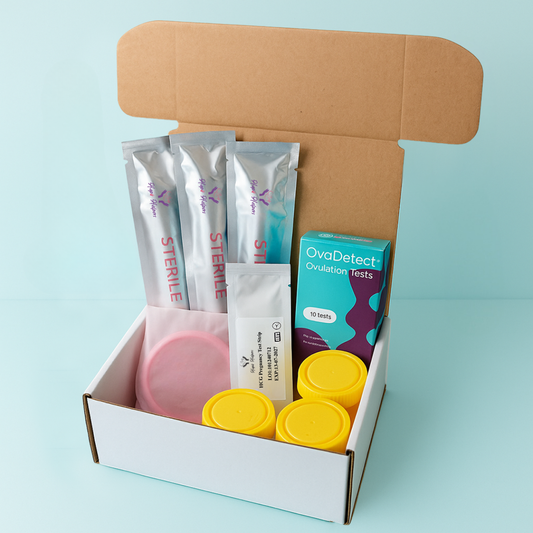
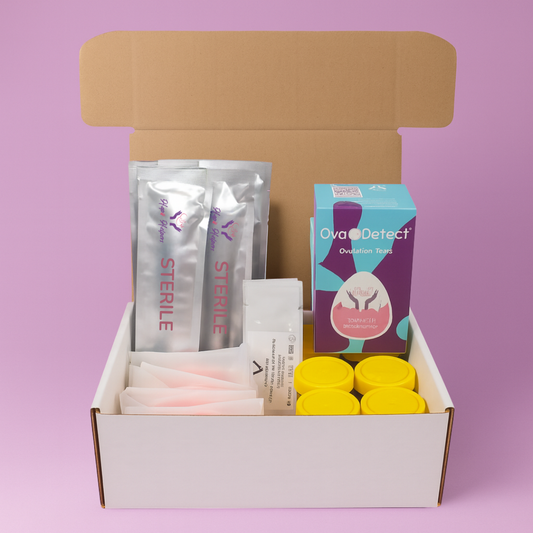
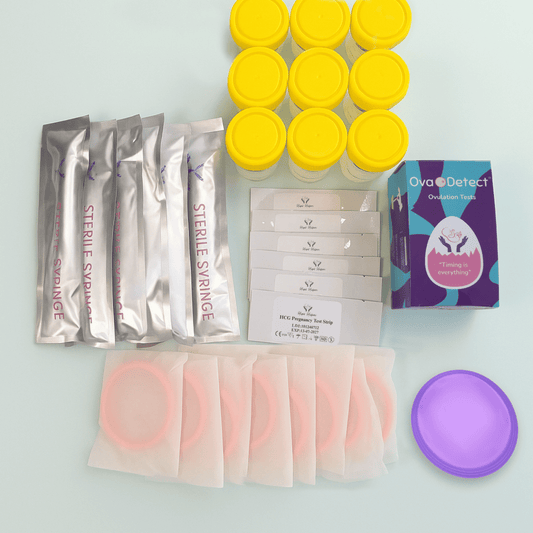
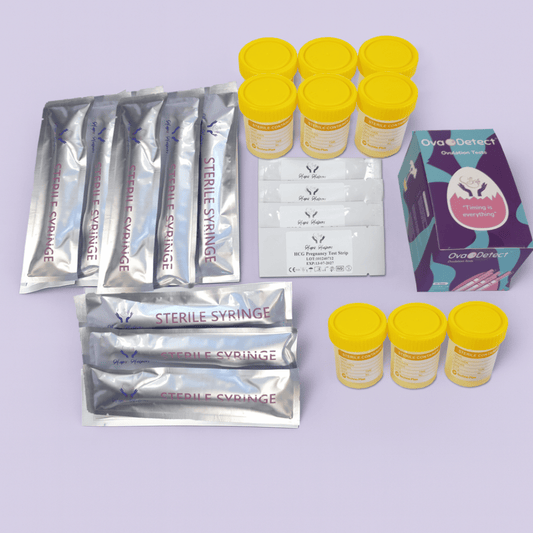
A good home insemination kit removes the guesswork. Our kits are assembled by people who've been through this journey themselves, and include only what you actually need:
- A sterile, soft-tipped insemination syringe (designed for comfort near the cervix)
- A sterile collection cup for sperm collection
- Optional: a soft disc to hold sperm in place post-insemination
No extras, no clutter, just the essentials to inseminate safely and confidently at home.
How much does at-home insemination cost in New Zealand?
Compared to clinical options, at-home insemination is significantly more affordable:
| Option | Approximate Cost (NZ) |
|---|---|
| At-home insemination kit | Under $100 |
| IUI at a private clinic | ~$1,800 per cycle |
| IVF (privately funded) | $10,000–$15,000+ per cycle |
| Publicly funded IVF (if eligible) | Free but subject to strict criteria and waitlists |
Public funding is available through Fertility Associates and Repromed if you meet certain criteria (including at least 12 months of trying, residency requirements, and others). However, waiting lists can be long, and many families including same-sex couples, who face additional hurdles in the pathway begin with at-home insemination while navigating the system.